
What is Eye Movement Desensitisation Reprocessing (EMDR)?
EMDR is a type of therapy that helps your brain heal from upsetting or traumatic past events. It’s about changing how those difficult memories are stored so they don’t cause distress in the present.
When you go through a stressful or traumatic experience, your brain and body focus on surviving rather than processing what’s happening. The sights, sounds, thoughts, and feelings from the event get stored in your brain in a “raw” or “unprocessed” way. Because these memories are stored incorrectly, your mind can get “stuck,” like a wound that hasn’t healed. The memory remains sensitive and is easily triggered, making you feel like you are reliving the event. To cope with this unfinished processing, you might develop symptoms like anxiety, depression, low self-esteem, phobias, or relationship issues.
How does EMDR work?
EMDR harnesses your brain’s natural healing ability. It assists the mind in reprocessing memories and changes our relationship to them. Together, we identify a core memory, event, or feeling and process it using bilateral stimulation, activating both sides of your brain until it becomes a neutral memory of a past event, free from strong emotional charges. This helps the brain link the memory with healthier thoughts and feelings, diminishing its influence over you, making it easier to manage, and fostering the development of stronger, healthier coping skills.

What to expect
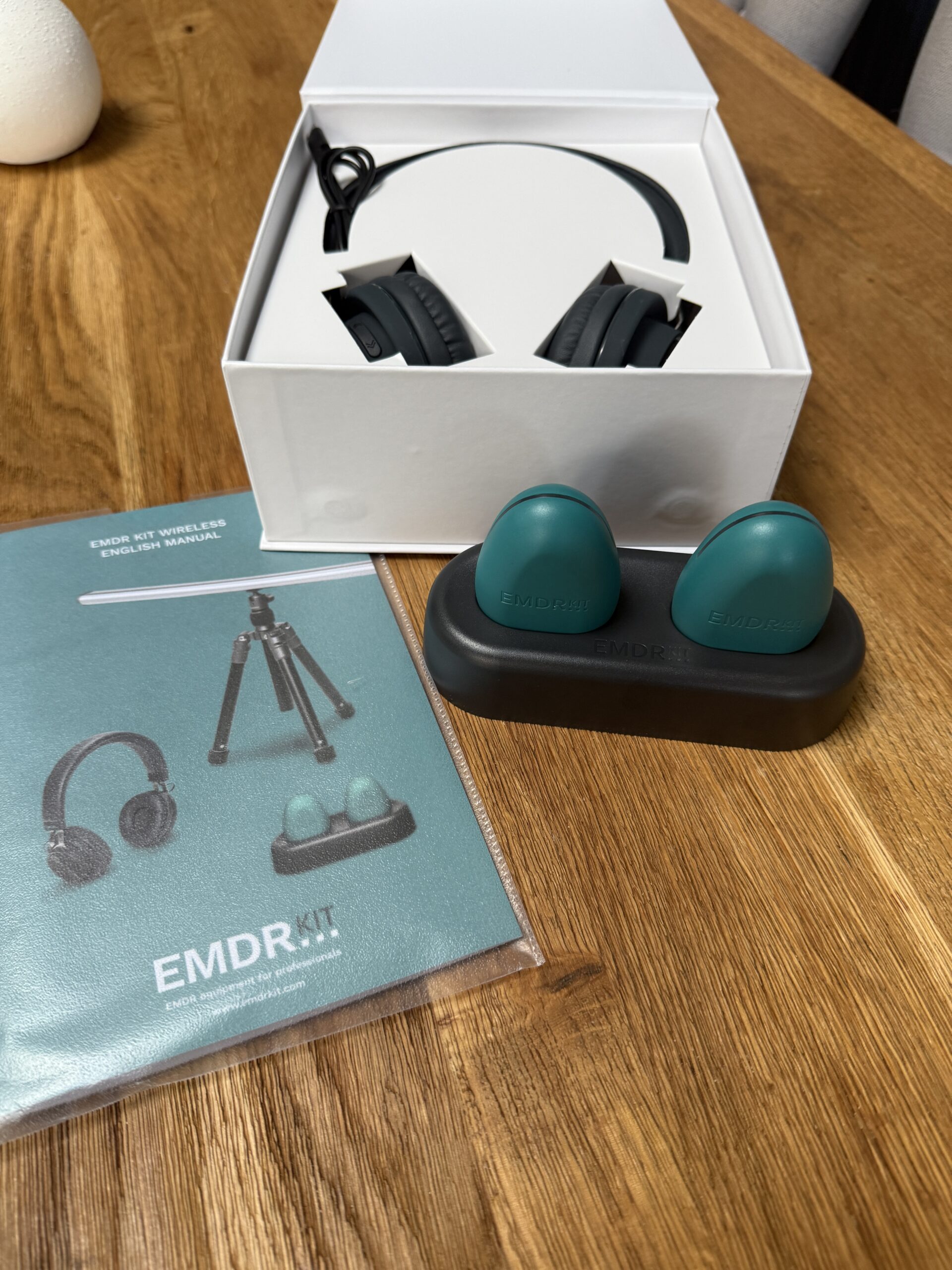
EMDR is an eight-stage process and is very different to talk therapy. We start with an assessment determining whether EMDR is right for you. It includes a thorough history of your life and any significant events, but you do not need to go into detail about them.Then we focus on building your internal strength and resources so you can learn to manage and soothe your nervous system. Your safety and stability are the priority before we begin working on difficult memories.Once you feel ready and safe, we begin the reprocessing using bilateral stimulation either side-to-side eye movements, hand buzzers (pulsars), or alternating sounds. Reprocessing sessions usually last 1 hour and 30 minutes.The number of sessions can vary. Simple, single experiences may take only a few sessions, while more complex issues may require many.
As a result of EMDR you can expect to experience:
- More ability to engage in and enjoy pleasurable activities and relationships.
- Less stress, anxiety, irritability, and hyper-vigilance.
- A reduction in how often you re-experience traumatic memories (e.g., flashbacks or nightmares).
- Greater confidence and ability to cope with memories without needing to avoid potential triggers.
- Fewer feelings of hopelessness, isolation, and depression.
- A boost in self-confidence and self-esteem.